

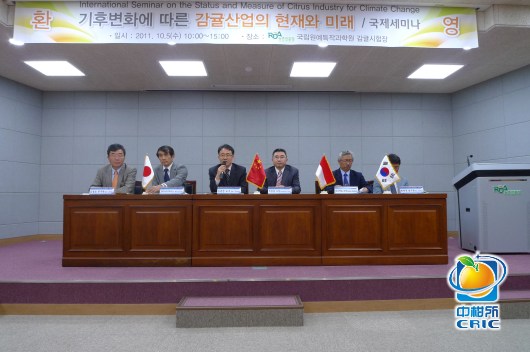
From Oct. 3rd to Oct. 8th, Prof. ZHOU Changyong, the director of CRI, was invited by South Korea’s Rural Development Administration to attend the “Climate Change and Citrus Industry’s Current Situation and Prospect Seminar” in Jeju Island of South Korea. Prof. ZHOU delivered a key-note speech on “Climate Change and Citrus Industry’s Current Situation and Solution in China”. After the meeting, he investigated the citrus industry in Jeju Island and visited the Citrus Museum, Citrus Research Station, the Climate Change Research Center, South Korea’s National Gardening & Herbal Medicine Research Institute and Subtropical Animal Experiment Station of Rural Development Administration. Prof. ZHOU also participated the 50th session of South Korea’s Tamna Cultural Festival.
South Korea’s Jeju Island has a population of 0.58 million. As one of the top tourist destinations in the world, Jeju Island receives average 11 million travelers each year, including 4 million overseas tourists. It enjoys the reputation of “Three Nos” (No Gates, No Thieves, and No Beggars). The local people are famous for their honesty and hospitality.
The citrus produced in Jeju Island makes up 98% of South Korea’s total production. Satsuma mandarin is the dominant varieties, which mainly consists of Miyagawa Wase and Xingjin strains. A small amount of Cephalocitrus is planted along the southern coastal area. Sweet orange is rarely planted in South Korea due to its climate features and the canker disease. South Korea’s total production of citrus reached 0.62m tons in 2010 (among which Jeju Island produced 0.58m tons), while its highest annual production hit 0.79m tons. South Korea’s citrus industry focuses on facilities cultivation, development of commercialized and processed citrus products in order to increase the value of the citrus. For instance, reflecting plastic mulching film technique is widely applied to improve the sweetness and production of citrus.
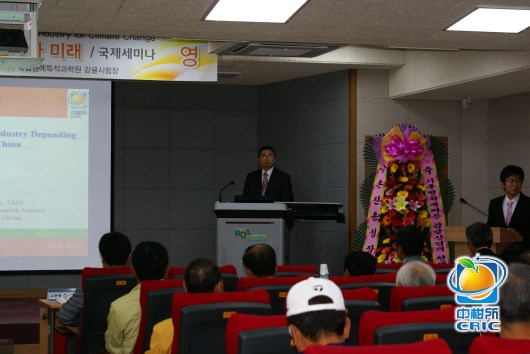
Director ZHOU Changyong giving seminar

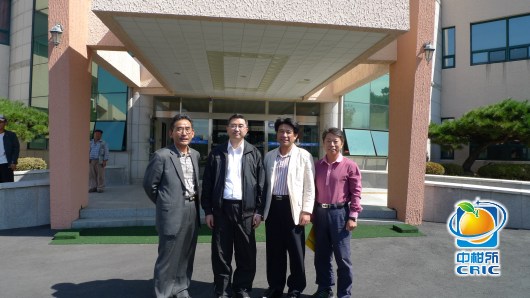
Group photo in the front of Citrus Museum
Visiting Climate Change Research Center

Visiting Subtropical Animals Experiment Station
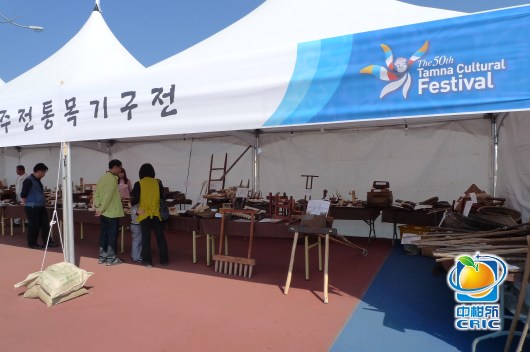
Display of traditional farm tools in the 50th Session of Tamna Cultural Festival

A series of citrus commodities sold at the market of old Jeju city
A great variety of processed citrus products are sold at South Korea’s markets, including citrus candies, citrus coffees, citrus biscuits, citrus sandwich ice-creams, citrus chocolates, citrus teas, citrus vitamins, citrus jams, citrus pectin, citrus juice, and citrus wines, which are the most popular souvenirs in Juju Island.
The Citrus Museum in Jeju Island was built in 2005. It is not a big building in size, but offers an audio-visual feast to the visitors, including the history and development of citrus industry in South Korea, as well as citrus-related technologies, products and entertainments.
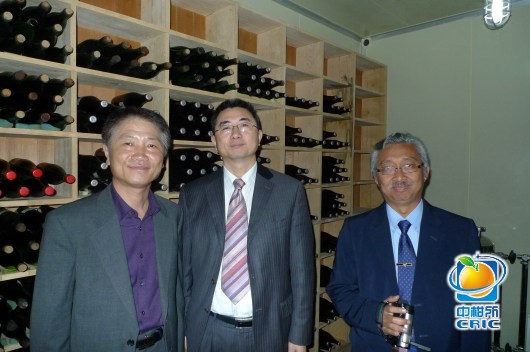
Visiting citrus wine cellar
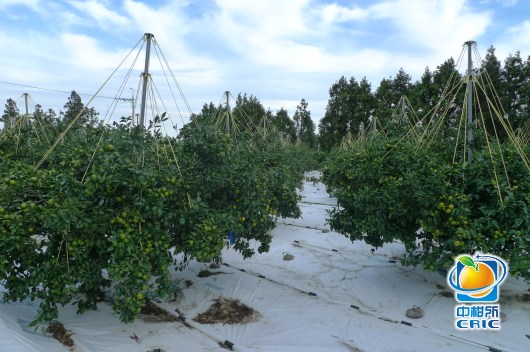
The citrus orchard covered by reflecting plastic mulching film
When visiting the Citrus Research Station, the citrus processing research was the most impressing. In 2010, one research project was awarded one of the three most excellent projects out of 3,000 ones by the Rural Development Administration of South Korea. In recent years, Citrus Research Station made great achievements especially in citrus wine making and extraction of polyphenols, the anticancer agent. Although the volume of South Korea’s citrus production was quite small in comparison with that of China (26.4 million tons in 2010), but the great efforts they spent on citrus scientific research and product development was particularly striking and enlightening.
 电脑版
电脑版 手机版
手机版